Government licence
Cadastur
Tour guide registered with Brazil's Ministry of Tourism. The registry is public and searchable — the number is on our credentials page.
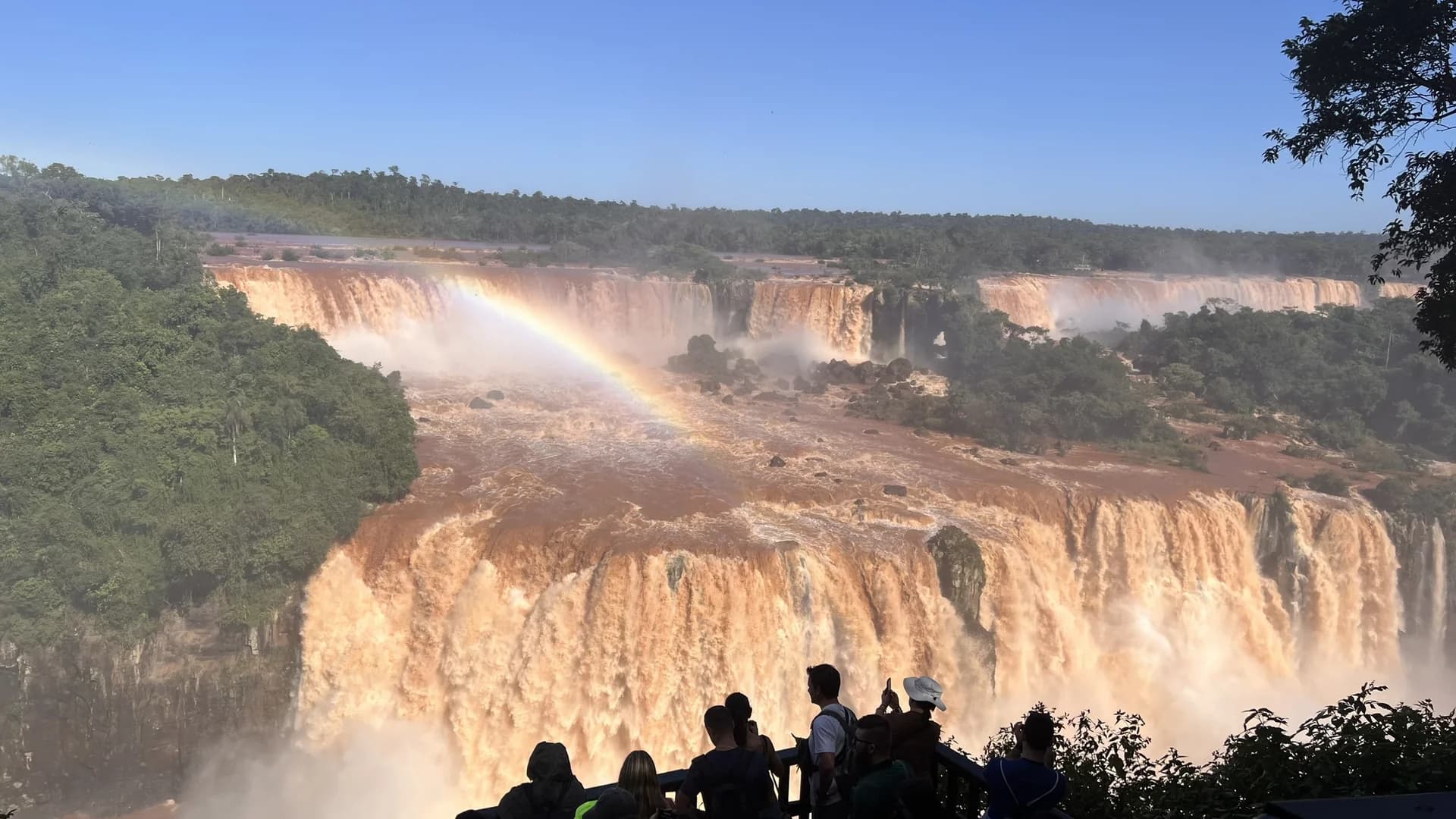
Foz do Iguaçu · Brazil · Argentina · Paraguay
A family-run operation based in Foz do Iguaçu. Your own vehicle, your own pace, and a licensed guide who lives here — on both sides of the border.
The short answer
Passeios Cataratas is a licensed tour operator based in Foz do Iguaçu, Brazil, running private tours across the triple border — Brazil, Argentina and Paraguay. Every tour is private: your group gets its own vehicle and driver-guide, and transport is charged per vehicle rather than per person, so small groups are not penalised. The company is registered with Cadastur, Brazil's official tourism registry, and operates with the COOTRAFOZ transport cooperative. Quotes are free and answered on WhatsApp.
Government licence
Cadastur
Tour guide registered with Brazil's Ministry of Tourism. The registry is public and searchable — the number is on our credentials page.
Registered company
67.277.484/0001-91
Passeios Cataratas Turismo Ltda — a Brazilian company with a public tax ID (CNPJ), not an informal reseller.
Local fleet
COOTRAFOZ
We operate through the largest tourism transport cooperative in Foz do Iguaçu, with insured and inspected vehicles.
Based here
Foz do Iguaçu
We live in the city. You talk to the people who will actually be in the car with you — not to a call centre in another state.
The tours people ask for most, and what each one actually is.
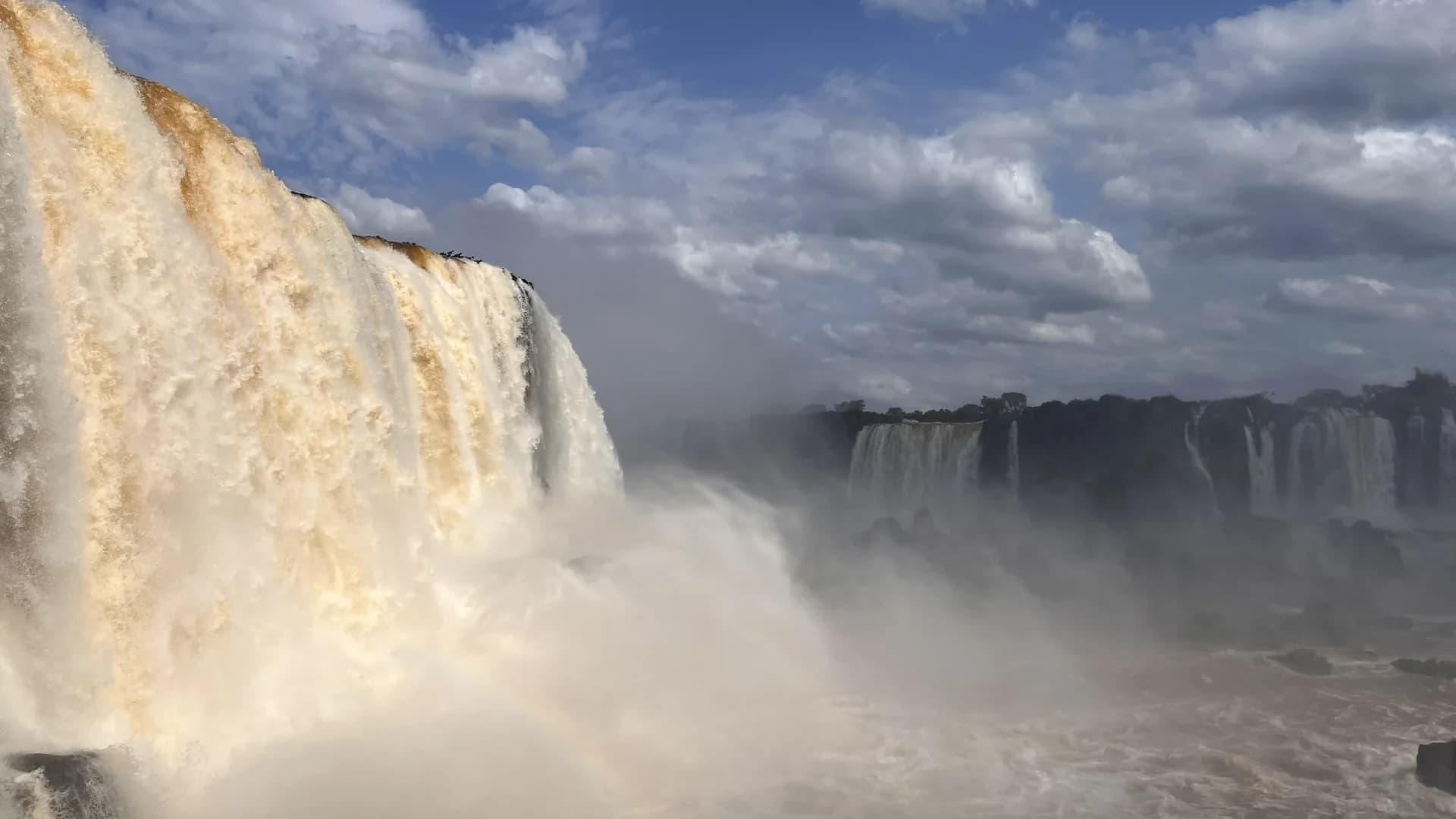
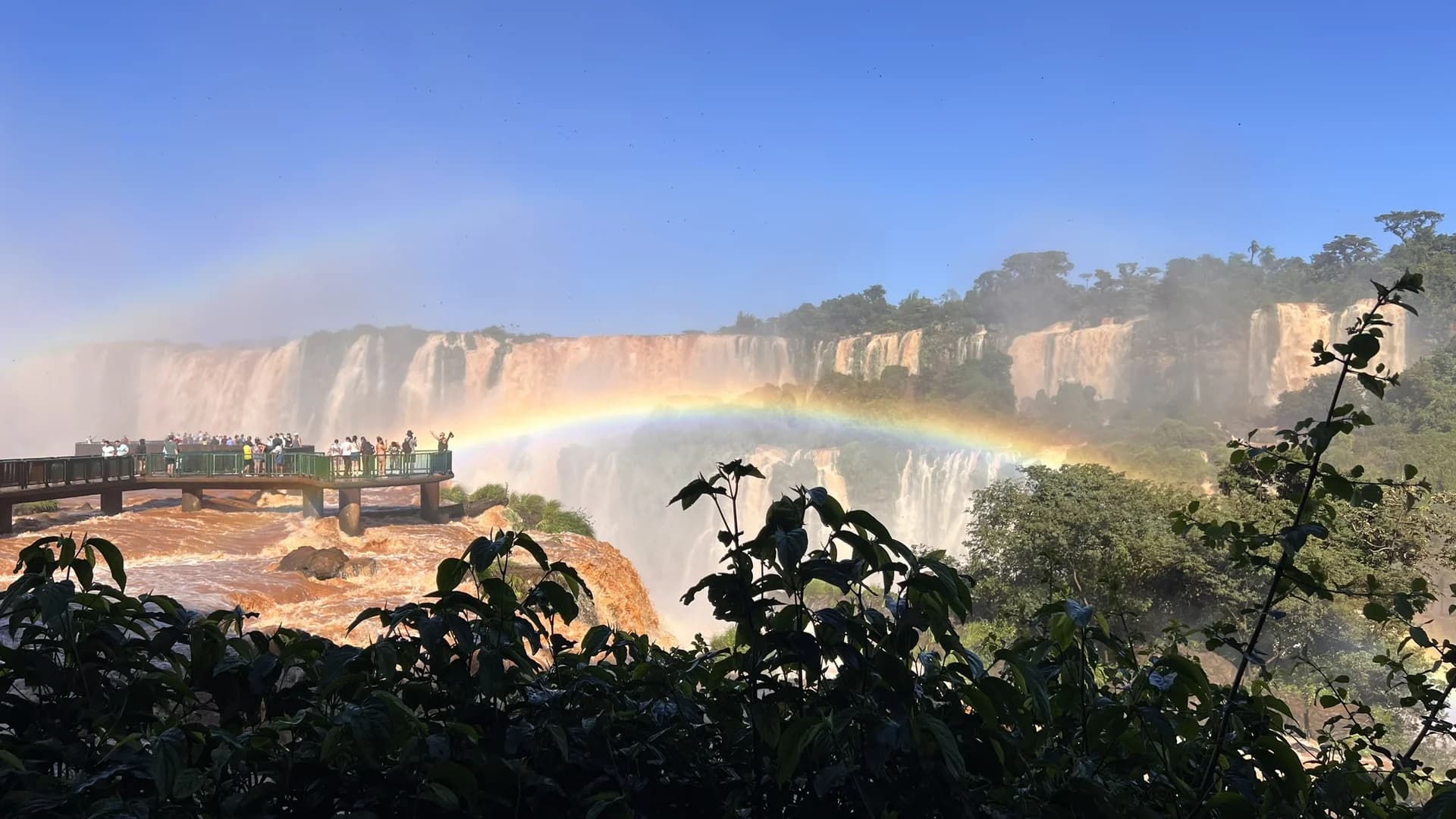
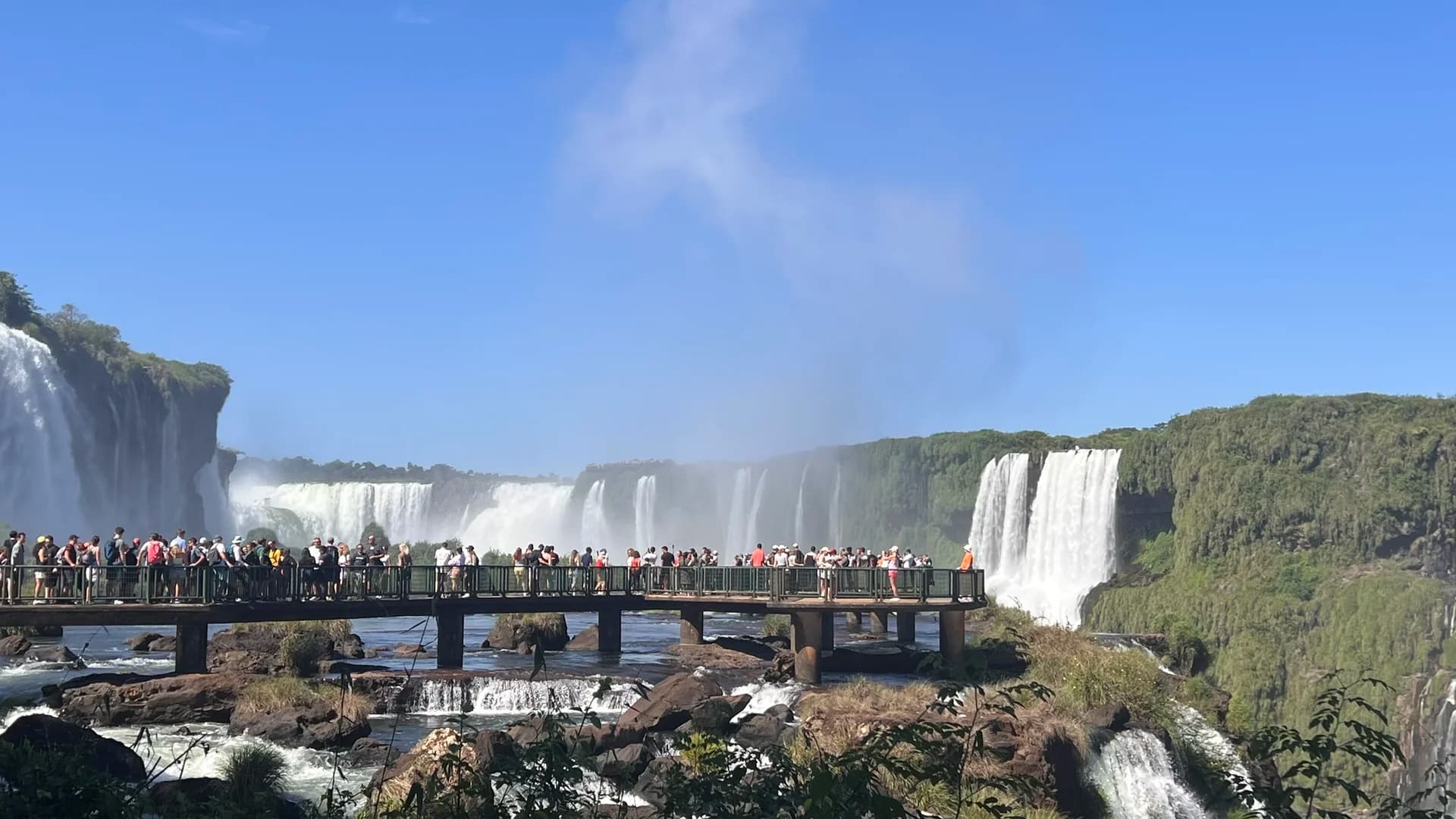
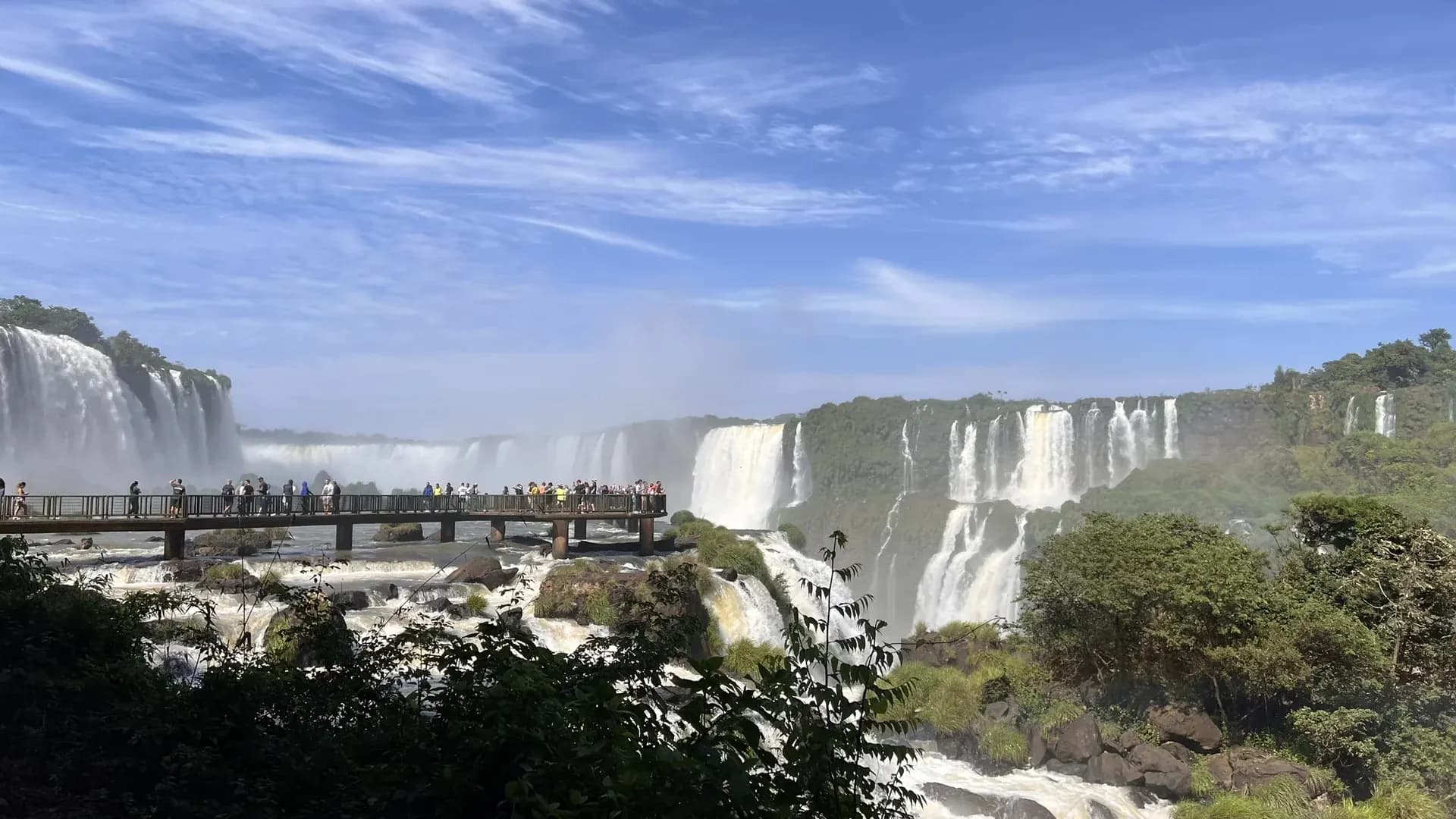
The panoramic side. A walking trail of roughly 1.5 km facing the falls, with a panoramic elevator at the end, inside Iguaçu National Park.
↗ page in Portuguese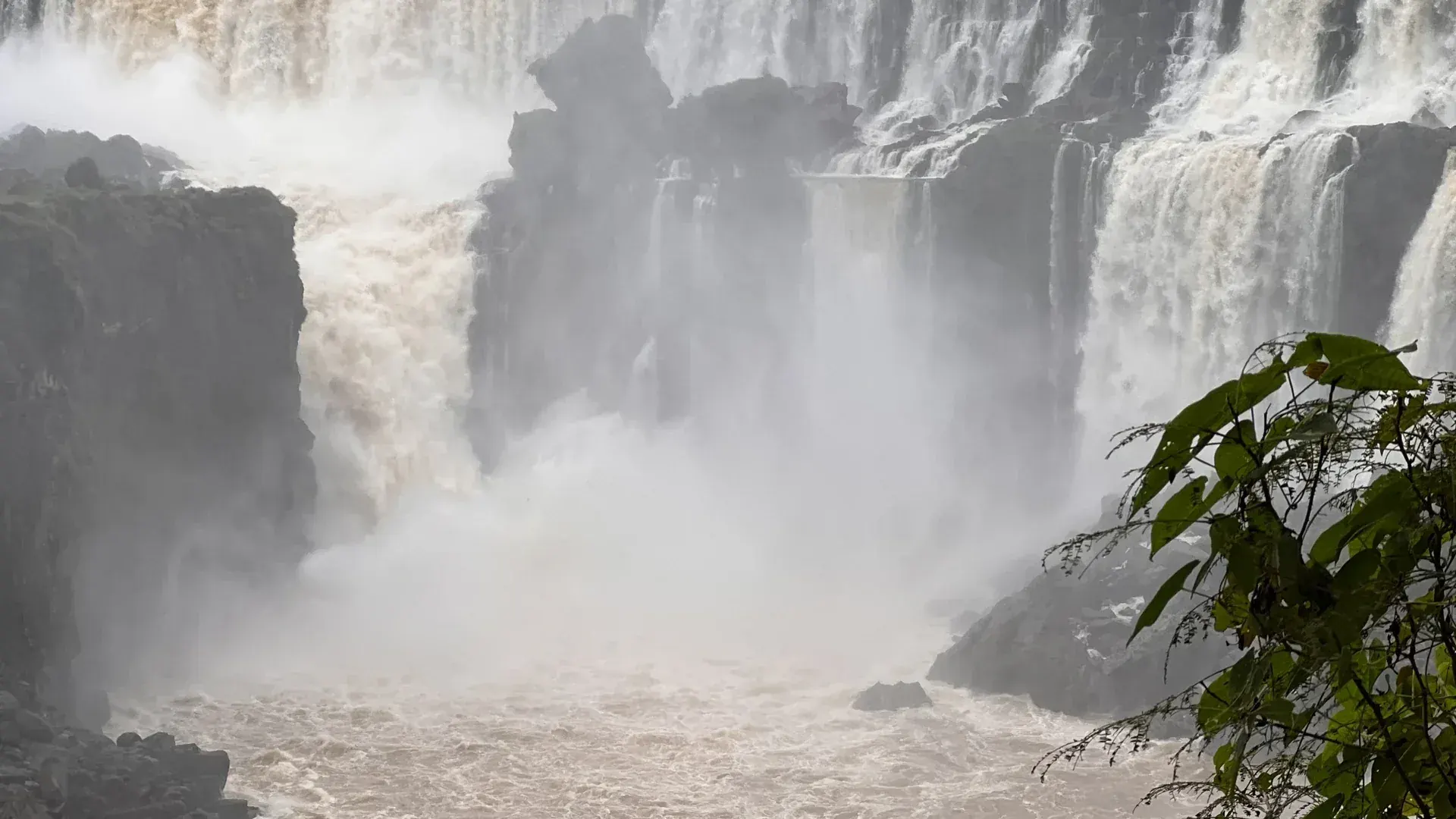
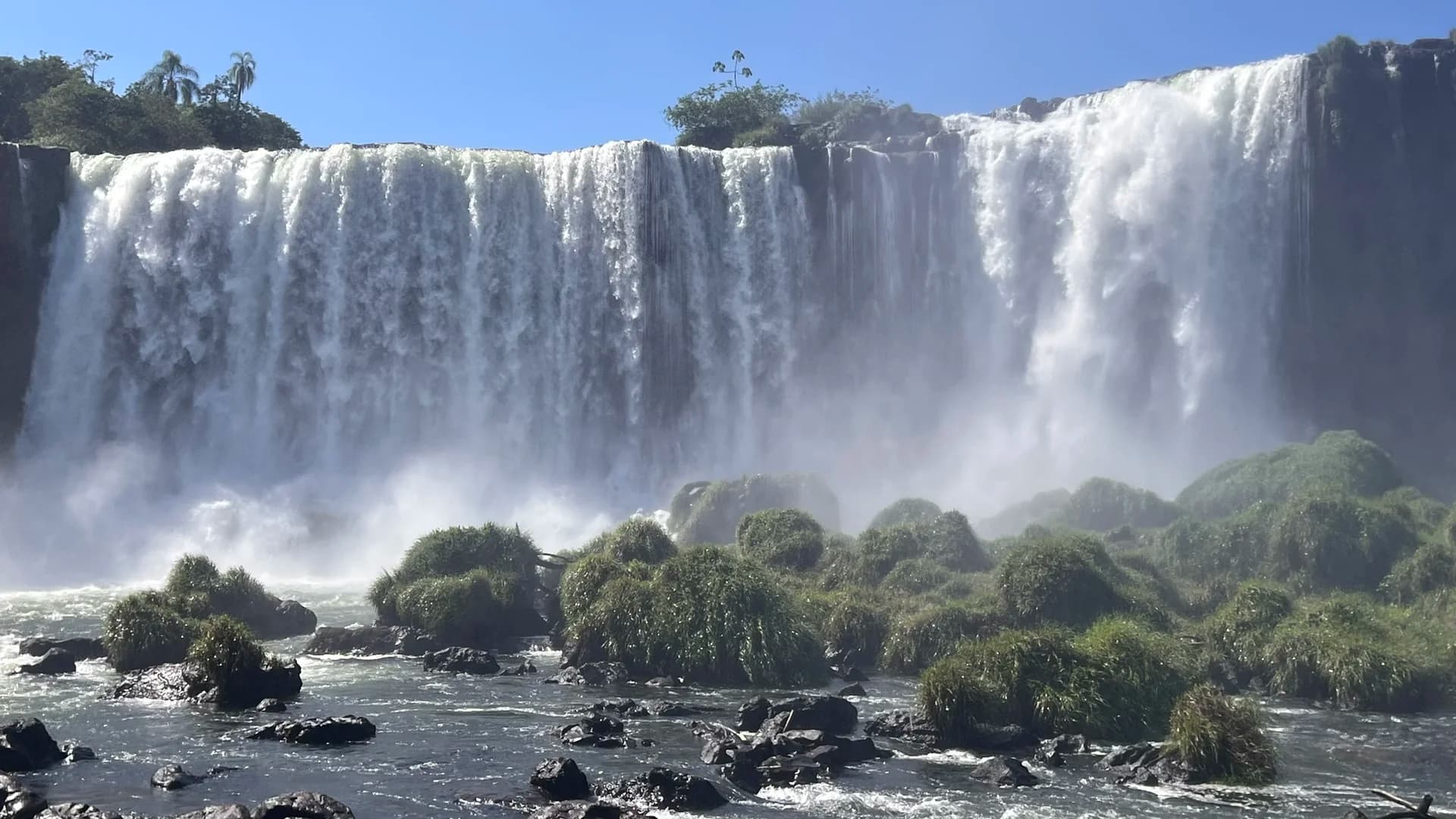
The immersive side. Upper and Lower circuits plus the Devil's Throat, inside Iguazú National Park. Includes the border crossing.
↗ page in Portuguese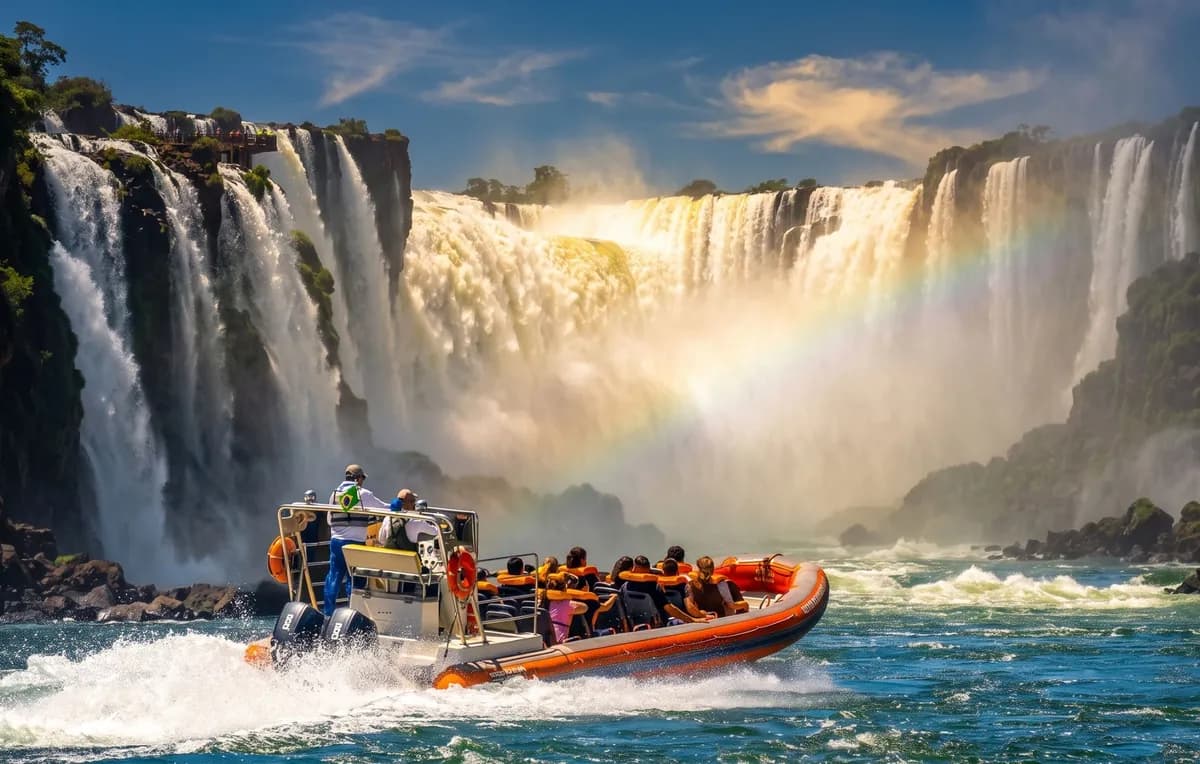
The boat that goes under the falls, inside the Brazilian park. You will get soaked, and that is the point.
↗ page in Portuguese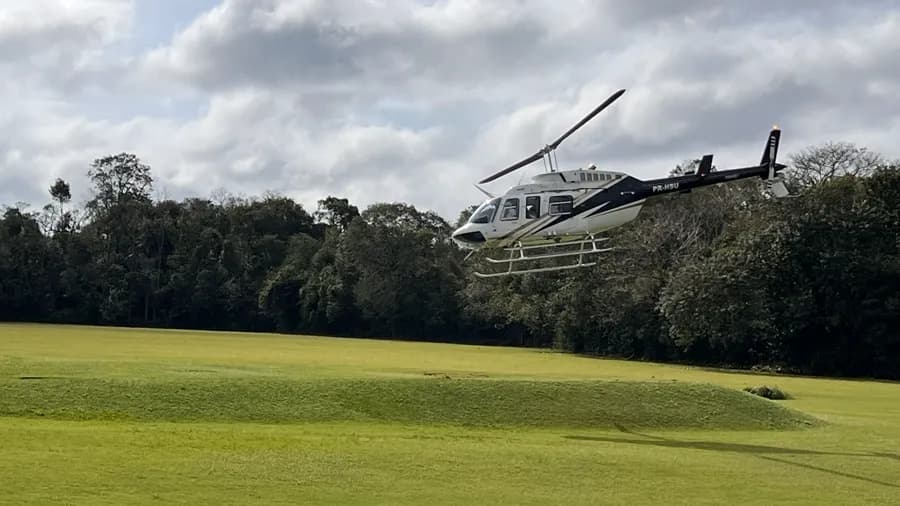
Panoramic flight operated by Helisul, with clear rules on weight and children's age explained before you book.
↗ page in Portuguese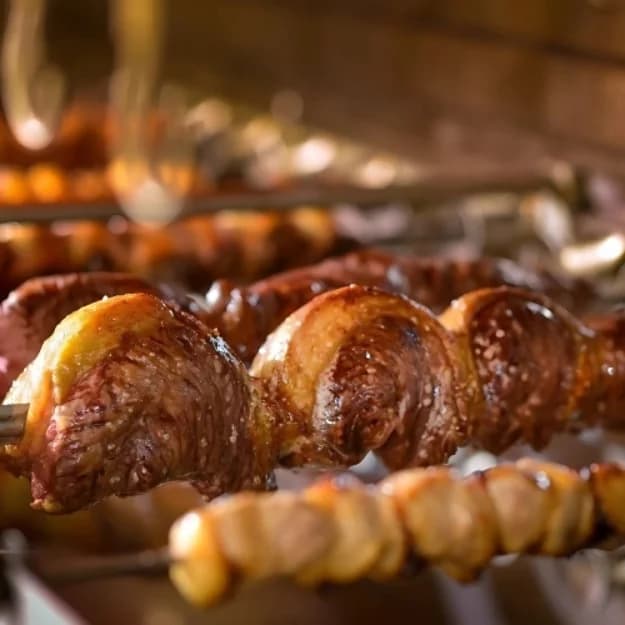
Dinner with a live stage show of Latin American dances — the classic first night in Foz do Iguaçu, and the one foreign visitors ask for by name.
↗ page in Portuguese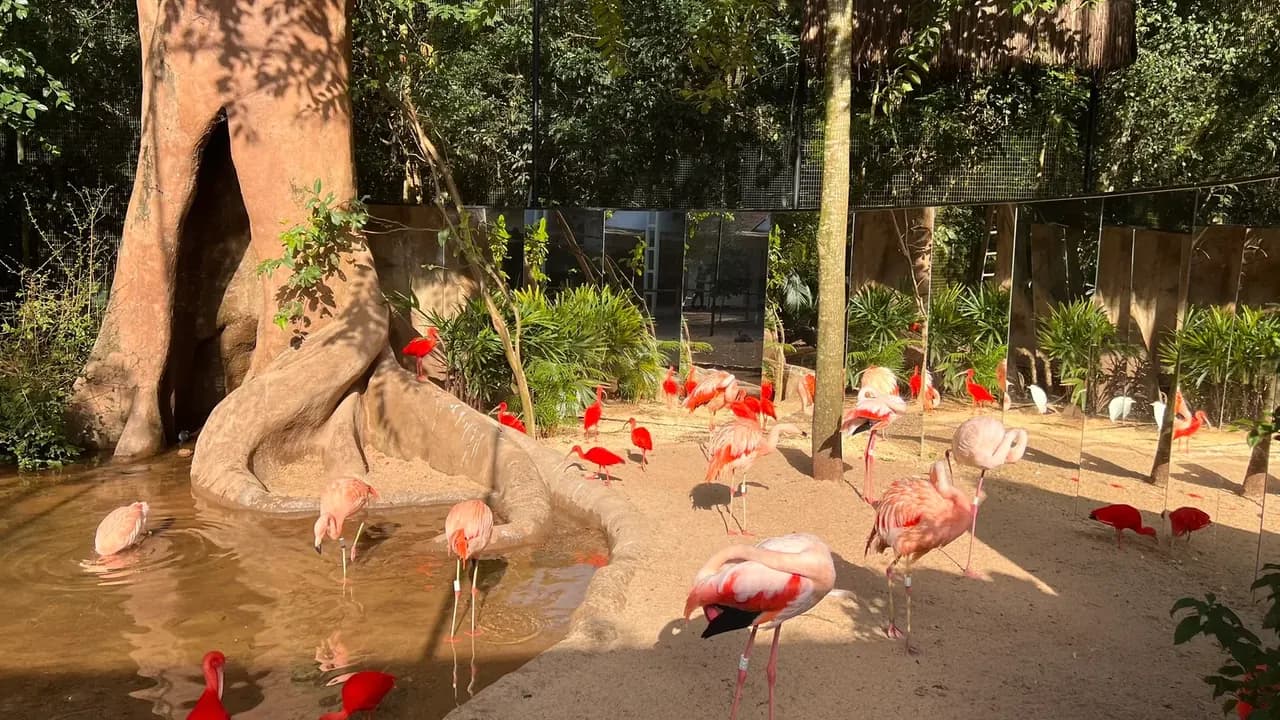
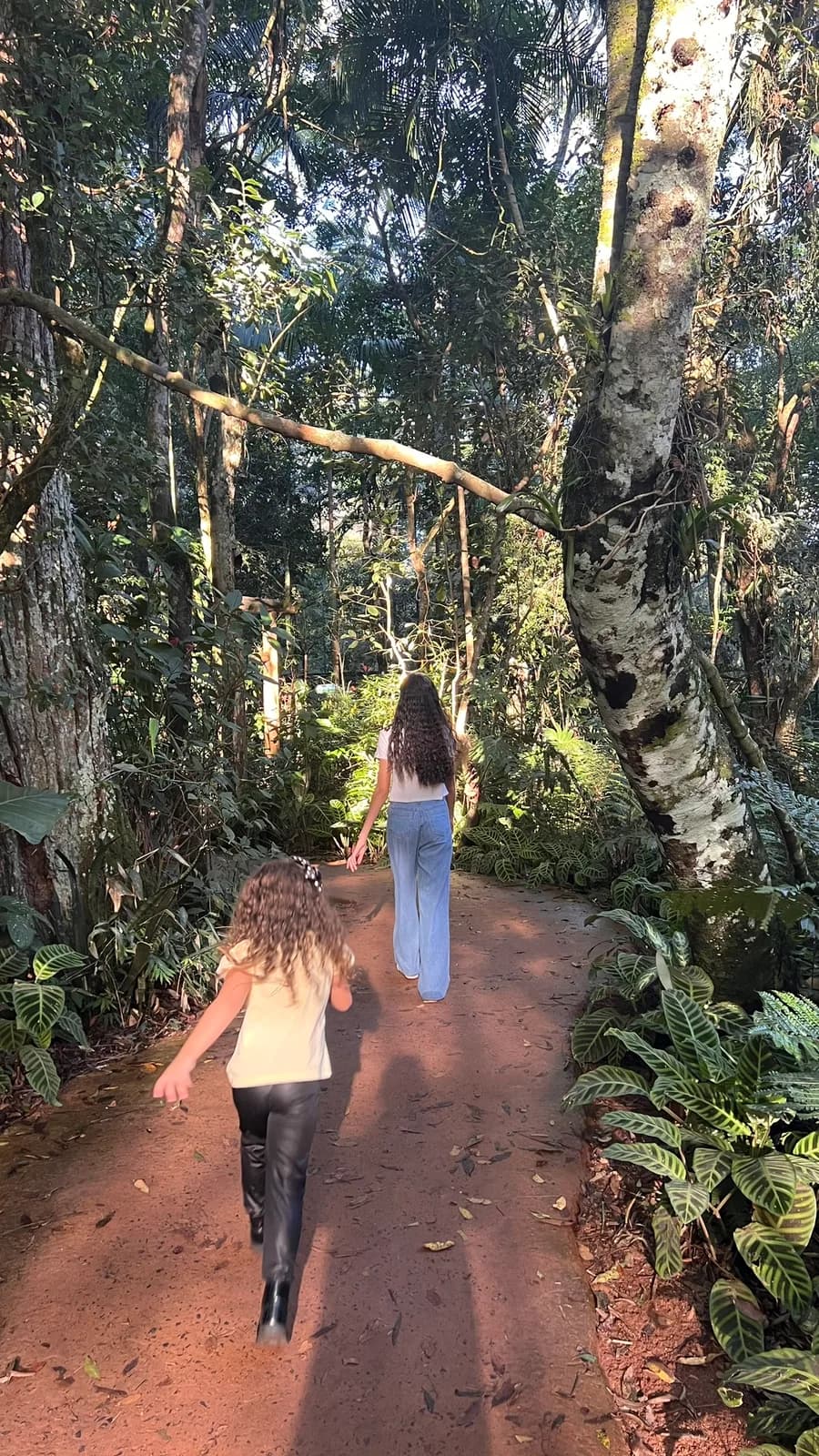
Walk-through aviaries in Atlantic Forest, right across from the national park entrance. A conservation institution, not a zoo.
↗ page in Portuguese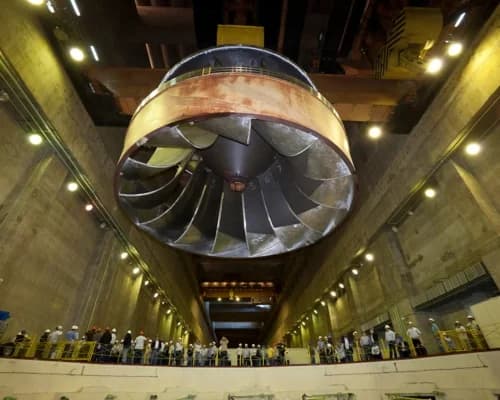
One of the largest hydroelectric plants in the world, on the border with Paraguay. Panoramic, Special and Biological Refuge options.
↗ page in Portuguese
Private transfers from Foz do Iguaçu airport and hotels, plus the city's landmarks — Three Borders Landmark, Mosque, Buddhist Temple.
↗ page in PortugueseEstimate
Real prices for international visitors — transport per vehicle, tickets per person, tourist taxes already included where they apply.
Pick your days
Add to the Brazilian side day
Private transport · Private sedan or SUV · 1–3R$ 680,00
Entrance tickets · for 2 peopleR$ 600,00
Prices in Brazilian reais, today's rates. The written quote confirms everything before you pay anything.
No deposit to get a price. No account to create.
Message us on WhatsApp with your dates, how many people and the ages of any children. Ages matter — ticket prices and free-entry rules change with them.
You get a day-by-day plan with what is included, pickup times, and a total. Quotes are free and there is no obligation.
Adjust anything, then confirm. Payment terms are agreed directly with you — Brazilian instant transfer (Pix) or card.
Your driver-guide meets you at the hotel lobby at the agreed time, in a vehicle that carries only your group.
Most tours sold at Iguazu are shared: a van collects eight to fifteen strangers from different hotels, and the day runs at the speed of whoever is slowest. That works, and it is cheaper per head. It is simply not what we do.
On a private tour, the vehicle carries your group and nobody else. You leave when you want, you stop where you want, and if the light is good at a viewpoint, you stay. Transport is charged per vehicle, not per person — which means a couple pays for a car, not two seats, and a family of five is not paying five times anything.
It also means the person driving you is the person answering your questions. On the Argentinian side, that includes getting the border crossing right, which is where most independent visitors lose an hour or more.
The river, right now
Live reading from the official monitoring station on the Iguacu River, refreshed every hour. This is our own data — no other operator publishes it.
Flow right now
16,101m³/s
Historical average
1,500m³/s
Compared to average
10.7×
Historic-event levels — follow the park official notices before you travel.
See the full live meter and the park live camera →Every figure here comes from an official source, and we say which one.
275
waterfalls
count varies between about 150 and 300 with the river level
80 m
Devil Throat drop
UNESCO World Heritage listing
2.7 km
semicircular front
about 1.9 km in Argentina, 0.8 km in Brazil
1,500 m³/s
average river flow
record: 46,300 m³/s on 9 June 2014
185,262 ha
Brazilian national park
created 1939 · UNESCO World Heritage 1986
390
bird species recorded
ICMBio survey for Iguacu National Park
Transport is charged per vehicle. This is how we size it.
| Group size | Vehicle | Note |
|---|---|---|
| 1 to 3 people | Sedan or SUV | The range ends at three because a guide, when you book one, takes a seat. |
| 4 to 8 people | Van | Lower van rate — nobody squeezed into a small minivan. |
| 9 to 14 people | Van | One vehicle, everybody together — up to 13 when a guide comes along. |
| 15 to 18 people | Van + car | Two vehicles running the same itinerary. With a guide, one guide rides in each vehicle — 14 to 16 people. |
| 19 to 28 people | Two vans | Coordinated as a single group, quoted by hand. With a guide, one per vehicle — 17 to 26 people. |
Because the price follows the vehicle and not the headcount, adding a passenger within the same range does not change the transport cost — 4 to 8 people pay the same van rate. Only the entrance tickets are per person.
Beyond the postcard
Nearly every visitor comes for the falls, sees the falls, and flies home. Fair enough — they are worth the trip on their own. But you are standing at a point on the map where three countries meet across two rivers, and each side has something the other does not.
We can add these to your itinerary without turning the trip into a marathon. Ask us and we will tell you honestly which ones fit the days you have — and which ones we would leave out.
A waterfall in Paraguay, 40 metres high, twenty minutes from Ciudad del Este — and almost empty compared to Iguazu. Most tourists never hear of it.
The city is famous for electronics, but the Lebanese and Chinese communities built a food and market culture that most shopping tours drive straight past.
The Argentinian town next door: Hito Tres Fronteras, the Güiraoga wildlife rescue centre, and dinner at a parrilla the way Argentinians actually eat.
The exact point where the Iguaçu meets the Paraná and Brazil, Argentina and Paraguay face each other. Best at sunset, with a Guarani cultural show after dark.
One of the largest hydroelectric plants on the planet, built by two countries together. The engineering scale is hard to believe until you are standing under it.
Straight answers, including the ones that cost us money.
It depends on your nationality and on which side you visit. Brazil and Argentina have separate visa rules, and they change. Citizens of many countries — including most of Europe and South America — enter both as tourists without a visa. Nationals of the United States, Canada and Australia should check the current requirement for each country before travelling, because these rules have changed more than once in recent years. Always confirm with the official consulate of each country; we are a tour operator, not an immigration authority.
Yes, and most visitors should — they are genuinely different experiences, not two views of the same thing. The Brazilian side gives you the panoramic postcard in about 2 to 3 hours. The Argentinian side puts you on walkways among the falls and takes a full day, including the border crossing. If you have two days, do one per day. If you only have one day, we usually suggest the Argentinian side, but we will tell you honestly which fits your group better.
Foreign visitors need a valid passport for both crossings. Brazilian citizens can use a passport or a valid national ID, and for these specific border crossings within 50 km a physical driving licence is also accepted. Digital documents and photocopies are not accepted. Minors travelling without both parents need a notarised travel authorisation — this is strictly enforced and is the single most common reason a family gets turned back at the border. We check your documents before the day of the tour.
Yes, and there are two ways to book. Transport only: a driver takes you door to door and you visit the attractions on your own. Transport with a guide: an English-speaking guide travels with you on each tour. The guide is a separate line in the quote, charged per tour and not per person, takes one seat in the vehicle, and costs the same whether the guide works in English, Spanish or Portuguese — what you are paying for is the guide, not the language. A group large enough for two vehicles gets one guide in each vehicle, so the guide line counts twice. It depends on guide availability for your date. The calculator on this page lets you add the guide and see the difference before you ask for anything.
Transport is priced per vehicle and depends on the route and the size of your group; entrance tickets are priced per person and set by each attraction, with different rates for children, seniors and foreign visitors. Because those rates change, we do not publish a fixed figure on this page — you get an exact total, itemised, in the written quote. Asking costs nothing.
The falls are impressive year-round, but the river changes everything. High water gives you raw power, mist and closed walkways at the extreme. Low water exposes the rock and gives you clearer photos. The historical average flow is around 1,500 m³/s; the record was 46,300 m³/s in June 2014. We publish a live flow meter for the Iguaçu River, updated hourly from official monitoring — it is the honest way to know what you will actually see.
You can absolutely do the Brazilian side alone — it is a bus, a trail and a queue. The case for a guide is stronger on the Argentinian side, where the border crossing, the train timings and the circuit order decide whether you see the Devil's Throat or miss it. And if your group has small children, elderly relatives or tight timing, having a vehicle that waits for you changes the day completely.
For high season — Brazilian school holidays in January and July, Easter, and the year-end period — book several weeks ahead, because vehicles and guides run out before tickets do. Outside those windows, a few days is usually enough. If you are already in Foz do Iguaçu and something fell through, message us anyway; we sometimes have a car free.
Send a message with your dates, group size and the ages of any children. You will get a written itinerary with an exact total, and no obligation to book.
Get a free quote on WhatsAppPasseios Cataratas Turismo Ltda · CNPJ 67.277.484/0001-91 · Foz do Iguaçu — PR, Brazil · +55 (45) 9 8823-7194